2 March, 2018
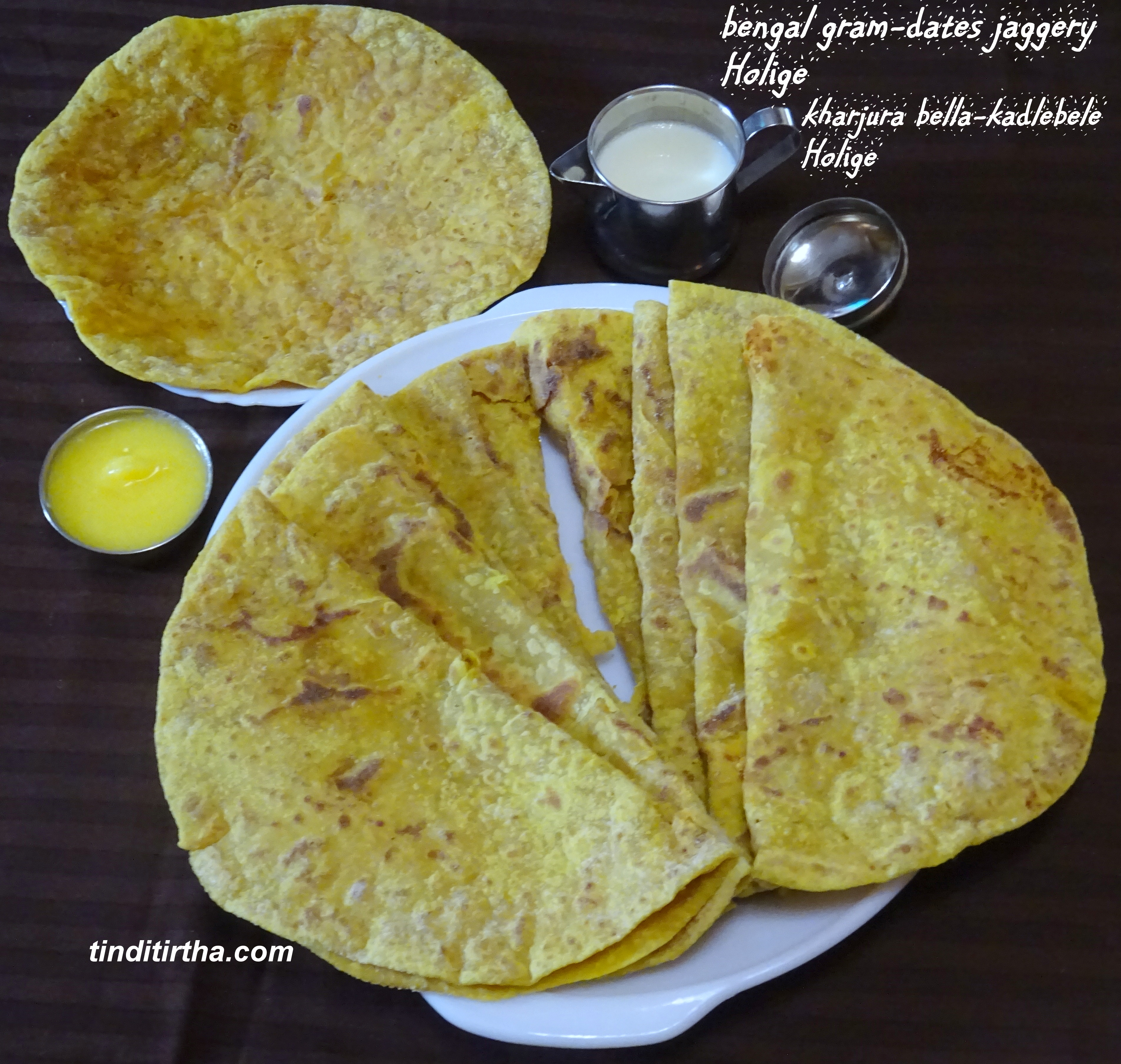
Kadale bele holige | Sweetened with date Palm jaggery |
ಕಡಲೆ ಬೇಳೆ ಹೋಳಿಗೆ | ಖರ್ಜೂರ ಬೆಲ್ಲದ ಸಿಹಿಯೊಂದಿಗೆ |
Recently I got date palm jaggery through someone from Kolkata. I have never seen or used this jaggery before. So today I tried making Kadlebele holige or bengal gram pooran poli using this particular jaggery.
It is differently aromatic and tasty compared to sugar cane jaggery. Rest of the procedure & is same as any other holige we generally do except for I have used the date palm jaggery.
Phoenix dactyliferous, commonly known as date or date palm, is a flowering plant species in the palm family, Arecaceae, cultivated for its edible sweet fruit (Wikipedia). Coconuts, dates, betel nuts, palm oil are an obvious product of Palm trees.
Date palm jaggery, made from the sap of the date palm, is a winter delicacy and is mainly produced in West Bengal. Bengalis use it extensively in place of sugar in all their sweet treats. It lends the sweet a great taste and its taste is simply unmatched by sugar.
The nutritious sap of the date trees is collected from the jungles, heated and transformed into jaggery. Overall its an excellent healthy substitute to sugar and used traditionally in the states of Jharkhand and West Bengal.
Date palm jaggery is a rich source of minerals like Iron, Potassium, Sodium and Zinc and carbohydrates and energy, and also acts as a cleansing agent by pulling out dust and unwanted particles from inside the body.
The below mentioned quantity of ingredients yielded 10 nos., of Holige
Date palm jaggery ⇓

Ingredients : measuring cup used – 250 ml
For the outer layer :
- Whole wheat flour – 1 cup
- Chiroti rave/fine quality sooji – 1/2 cup
- Ghee – 1 tsp
- Turmeric powder – 1/2 tsp
- Rice flour – 3/4 tbsp
For the filling :
- Bengal gram/kadlebele/chana dal – 1 cup
- Grated fresh coconut – 1/2 cup
- Date palm jaggery – 1 cup
PROCEDURE :
- Pressure cook bengal gram using enough water, Put it in a strainer and collect the dal water in a container to use it later for making saaru/rasam
- Gather together ghee, turmeric powder and rice flour in a wide bowl, rub everything together in a circular motion till it becomes like butter, then add in the flour & semolina/sooji/rave, combine everything well, add little by little water and knead into a stiff, soft dough, soak it with oil, cover and rest it for minimum 2 hours
- Now in a pan/kadai put cooked and strained lentil/dal/bele, coconut and jaggery and cook till all the water evaporates


- Remove the mixture from the fire once it leaves the edges of the pan and comes out as a whole, Allow it to cool completely, then grind into a smooth paste without adding water and divide into portions


- Now knead again the soaked dough really well, pinch a portion, stuff in the filling, roll it into a thin circle by dusting wheat flour or rice flour (I always use rice flour)


- Heat the tawa/griddle, transfer the rolled holige on it, cook on both the sides by applying oil


- Serve hot with ghee and milk

Hooranada Kattina saaru ⇓


However you can have a look at some more holige/Puran Poli recipes, Like –
- Pigeon peas/togari bele kayi holige – no grind method
- Khara holige/Savoury/spicy Puran Poli
- godhi hittina bele holige/wheat flour lentil Puran Poli
- ananas holige/Pineapple Puran Poli
- Kaayi holige/Coconut jaggery Puran Poli
- Sajjige holige/semolina stuffed Puran Poli
- haalu holige/Puran Poli paired with poppy seeds milk
- sihi genasina holige/sweet Potato Puran Poli
- Sihi Kumbalakayi holige |Pumpkin Puran Poli | Video |
- alasande kalu holige/black eyed beans Puran Poli
- badami holige/almond Puran Poli
- kadelebeejada holige/groundnut Puran Poli
- Kharjurada holige/dates sesame Puran Poli
- Kobbari holige | Sakkare holige |
- Carrot stuffed sweet flat bread| Carrot holige|
- Banana holige | Banana Puran poli |
- Hittina holige | Bili holige |
- Beetroot Puran Poli | Beet Makhana Puran Poli |
- Gujarati Vedmi/Puran Poli